WINE INVESTMENT IN FRANCE 2026
3 ways to invest in a vineyard 🍇
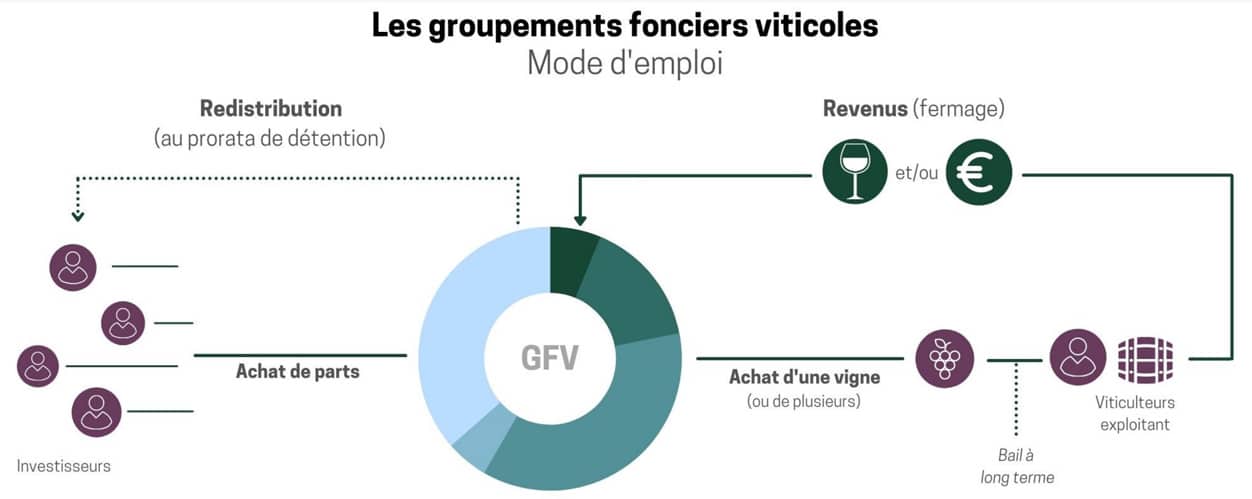
GFV
- Become a co-owner of the Wine Estate of your choice from €7,500.
- A moment of conviviality and wine tourism at the annual General Meeting.
- The Operation Arranger takes care of everything.
18% Income Tax Reduction Fund
- Buy shares in a wine investment fund from €10,000.
- 18% upfront Income Tax reduction (apply only for french tax residence).
- Domaines d’exception en Champagne ou Bourgogne.
- Grands Crus Owners’ Club.
- The Management Company runs the Fund.
Achat Vignoble
- Become the sole owner in Champagne or Burgundy from €250,000.
- Design your own wine if you wish.
- A privileged relationship with the winegrower.
- You handle the administrative management (with the support of an Accounting Firm).
Why invest in a Wine Estate?
- Become the Owner of rare and prestigious Appellations
- Help preserve an ancestral expertise
- Diversify your wealth into a real, tangible asset (French vineyards)
- Receive a supplementary income
- Pass on your capital under optimal conditions
- Get Bottles at a preferential rate
The pleasure of tasting your own wine
Your investment brings you a financial income in the form of rent (cash option) or bottles from the Estate (distribution-in-kind option).
To stock up your cellar, you will of course be able to buy additional bottles at the « Owner » rate.
Favourable taxation
You will find our detailed section below on the favourable taxation applied to this investment.
Low volatility, a long-term lease
On average, the return on GFV shares stays around 2% per year if you opt for cash, or +4.5% with a distribution in kind (bottles) (excluding the land’s potential capital gain over time).
As the risk is indeed limited, the return is inherently lower than that of more aggressive investments. It nevertheless remains attractive compared to the return of a life-insurance euro fund, for example.
Limited risk
- Indirect investment: you are not the vineyard operator; the Estate is managed by a professional winegrower.
- Risk pooling: investing in several Wine Estates rather than just one.
- Limited weather risk: in the event of drought or storm, your return is not affected. Indeed, even if the vines suffered bad weather, the Operator will continue to pay the rent.
A WORD FROM THE WINE EXPERT
DUE TO DEMOGRAPHIC AND CLIMATE TRENDS, GLOBAL PRESSURE IN FAVOUR OF GREAT FRENCH WINES WILL ACCELERATE.

GFVs online
List of GFVs in progress
Subject to regular updates of the Site as well as share availability, we are pleased to share with you the list of ongoing Groupings:
- GFV Volnay - 6 bottles - from €15,000.
- GFV Gigondas / Vacqueyras - 12 bottles - from €5,600.
- GFV Alsace - 12 bottles - from €5,000.
- GFV Beaujolais, Brouilly, Bourgogne - 24 bottles - from €4,800.
- GFV Châteauneuf-du-Pape - 7 bottles - from €6,100.
GFV shares sold previously
The GFVs whose commercialisation has recently ended
New Wine Groupings launched per year: fewer than 7.
Time to raise capital from the public: from one day to several weeks.
Average investment ticket per saver: €24,500
- GFA Provence, olive grove, 7 litres of olive oil - from €4,500 / share.
- AOC Saint-Émilion Grand Cru - 6 bottles - from €6,800 / share.
- GFV Champagne Côte des Bar - allocation of 9 bottles - from €9,000 / share.
- GFV Champagne Montagne de Reims - allocation of 12 bottles - from €5,600 / share.
- AOC Alsace - 12 bottles - from €4,500.
- AOC Champagne Vallée de la Marne - Phase 2 - 9 bottles - from €8,400 / share.
- AOC Bandol - 12 bottles - from €5,600 / share.
- GFV Saint Joseph (Vallée du Rhône) - 9 bottles - from €6,200.
- AOC Châteauneuf-du-Pape - 9 bottles - over €7,800 per share.
- GFV Champagne Côte des Blancs - from €53,000.
- AOC Pessac Léognan ‘Réserve du Château’ - 12 bottles - from €6,000.
- AOC Cornas and Saint Joseph - 6 bottles - from €8,000.
- AOC Coteaux d’Aix-en-Provence and IGP Méditerranée - 24 bottles. Share from €5,000.
- Corbières and IGP Pays d’Oc appellations - 18 bottles - around €3,500 / share.
- AOC Châteauneuf-du-Pape - over €6,000 per share.
- AOC Alsace-Riesling - 12 bottles - around €7,000 / share.
- GFV Condrieu and Côte-Rôtie - 6 bottles - around €13,000 / share.
- GFV Beaujolais - Bourgogne - around €5,000 per share.
- Pommard Bourgogne - share above €15,000.
- GFV Satellites de Saint-Émilion.
- GFV Le Plateau de Blu, AOC Champagne - €57,430 per share.
- GFV AOC Saint-Émilion Grand Cru - with an entry ticket of around €75,000.
- GFV Francs-Côtes de Bordeaux - €57,000 per share.
- Protected Geographical Indication (IGP) Calvados Normandie - 12 bottles from 5 Prestige cuvées: white wine, red, and straw-wine style. Share under €5,000.
- AOC Champagne in the Vallée de la Marne - allocation made up mainly of the Pinot Meunier grape - share between €7,000 and €10,000.
- AOC Châteauneuf-du-Pape - family estate for 3 generations - allocation of 7 red bottles - share around €6,000.
- GFV Bourgogne Côte de Nuits Fixin 1er Cru - located in the north of the Côte de Nuits, in the village next to Gevrey-Chambertin, the confidential plot of the GFV Clos du Chapitre extends over 1 ha.
- AOC Bandol Les Restanques de l’Olivette.
- AOC Champagne Côte des Bar D.Massin.
- AOC Champagne 1er Cru and Grand Cru - entry ticket for the Foncière Champenoise from €58,000.
- AOC Les Terrasses du Larzac, Mas Origine agroecology (Languedoc).
- GFV Champagne Les Fleurs Sauvages, Famille Gremillet.
- GFV in AOC Condrieu, Maison Baptistine.
- GFV Châteauneuf-du-Pape, Domaine du Père Pape Mayard.

Get in touch
Discover the first one quickly
The main French Appellations
One of the oldest vineyards in France
Stretching along the eastern foothills of the Vosges, Alsace is one of the oldest and most distinctive vineyards in France. Its continental climate and patchwork of soils give rise to remarkably aromatic, mostly dry white wines. Riesling, Gewurztraminer, Pinot Gris and Muscat each express their terroir with rare precision. The region’s fifty-one Grands Crus reward the growers who work the best-exposed slopes. Demand for authentic, age-worthy whites remains steady both in France and abroad. For an investor, Alsace offers a recognised appellation heritage and tightly held parcels that rarely come to market.
Discover why to invest in a Wine Estate in AlsaceA global benchmark
Bordeaux is the world’s reference point for fine wine and the most internationally traded vineyard region in France. Its Left Bank Cabernet Sauvignon and Right Bank Merlot define a style imitated across the globe. The 1855 Classification, the prestige of the Médoc, Saint-Émilion and Pomerol, and the en primeur market all sustain enduring worldwide demand. The châteaux here combine real agricultural value with genuine brand equity built over centuries. Land in the most sought-after appellations is scarce and closely held. For a long-term investor, Bordeaux represents a level of stability, liquidity and global recognition rarely matched elsewhere.
Learn more about Bordeaux GFVsExceptional wines
Burgundy produces some of the most coveted wines in the world from just two grapes: Pinot Noir and Chardonnay. Its mosaic of climats, now recognised by UNESCO, divides the Côte d’Or into countless named parcels, each with its own character. Extreme fragmentation of ownership and a very limited planted surface make Burgundian land among the rarest in France. Prices across the Côte de Nuits and the Côte de Beaune have risen sharply over the past two decades, driven by collectors and international buyers. Even modest holdings carry significant prestige. For an investor, Burgundy combines scarcity, reputation and a deep, resilient demand for its grands crus.
Learn more about Burgundy GFVsDiversity of soils and Appellations
The Rhône Valley offers exceptional diversity across its northern and southern sectors. In the north, Syrah reigns on the steep granite slopes of Côte-Rôtie, Hermitage and Crozes-Hermitage. In the south, Grenache-led blends shine in Châteauneuf-du-Pape, Gigondas and Vacqueyras, on soils of rolled pebbles, clay and limestone. This breadth of terroirs and appellations gives investors a wide spectrum of price points and styles. Rhône wines enjoy a loyal following and steadily growing international recognition. Their generous, sun-driven character makes the region a dependable and accessible route into French vineyard ownership.
Learn more about Rhône Valley GFVsThe essential one
Champagne is the only region in the world entitled to use the name, and its sparkling wines remain a global symbol of celebration and luxury. Chardonnay, Pinot Noir and Meunier are grown across distinctive sectors such as the Montagne de Reims and the Côte des Bar. Worldwide demand from the great houses underpins some of the highest vineyard land values in France. Strict regulation of the appellation tightly limits where new vines may be planted. This scarcity, combined with a powerful international brand, supports long-term value. For an investor, Champagne is an emblematic and highly sought-after appellation.
Discover Wine Groupings in ChampagneFor Rosé lovers
Provence is the spiritual home of premium dry rosé, a category whose global popularity has grown dramatically in recent years. Bathed in Mediterranean sun, its vineyards blend Grenache, Cinsault, Syrah and local grapes into the pale, elegant wines the region is famous for. Rising international demand, particularly from the United States and northern Europe, has lifted both production and land values. The lifestyle appeal of the area adds a tangible pleasure dimension to ownership. For an investor drawn to a fast-growing, fashionable segment, the Côtes de Provence offers genuine momentum and a distinctive identity.
Power and generosity
The Languedoc-Roussillon is the largest vineyard area in France and one of its most dynamic. Long known for volume, it has undergone a remarkable quality revolution, with ambitious growers crafting concentrated, characterful Mediterranean reds. Abundant sunshine, varied soils and a wealth of appellations give the region real depth. Land here remains comparatively affordable, offering an accessible entry point relative to the classic regions. Growing critical recognition and export demand continue to reshape its reputation. For an investor, it combines attractive value today with clear potential as quality keeps rising.
Visit the page dedicated to Languedoc-Roussillon Wine GroupingsBack in favour
Beaujolais is enjoying a genuine renaissance, rediscovered by sommeliers and collectors alike. Its single grape, Gamay, planted on granite and schist soils, produces fragrant, food-friendly reds of growing seriousness. The ten Crus, including Morgon, Fleurie and Moulin-à-Vent, deliver structure and ageing potential that rival far pricier regions. Its proximity to Burgundy and historically modest land prices have drawn renewed attention from investors and even neighbouring estates. Critical acclaim has sharpened demand for the best parcels. For those seeking value with real upside, Beaujolais is a region firmly back in favour.
Why invest in a Beaujolais Wine Grouping?VINEYARD PLOTS CURRENTLY FOR SALE
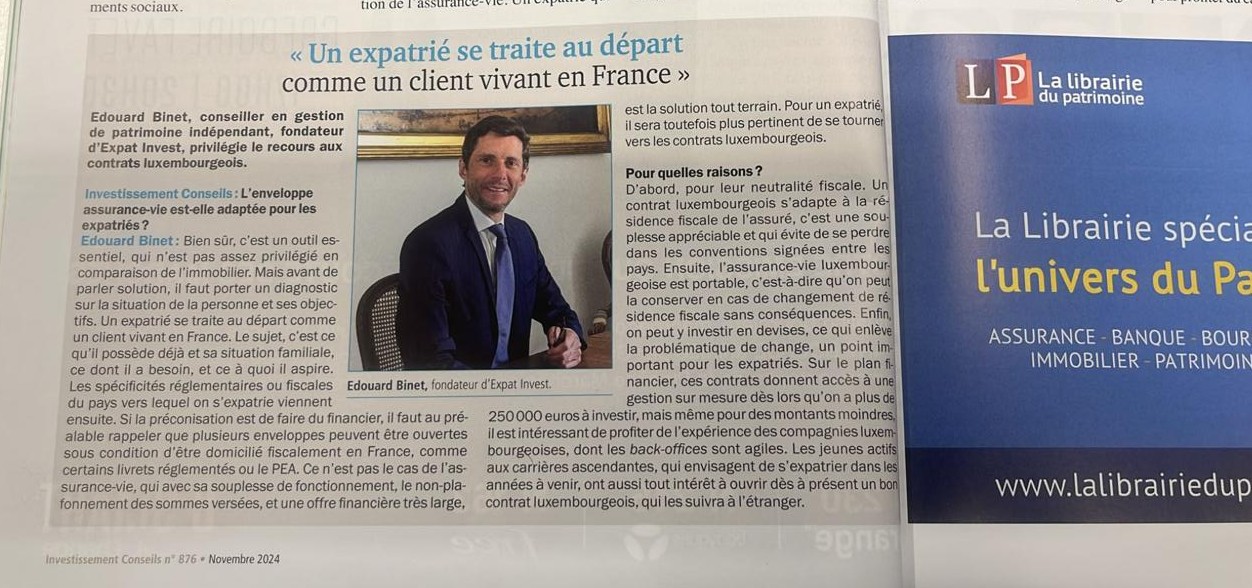
📰 What does the Specialist Press say about this “passion” investment?


* Mandatory disclosures
- Classification: GFV
- Geographic Zone: France
- MiFID/RISK Classification: 6/7 (high)
- Investment horizon: 8 to 10 years
- Price per share: Depending on the GFV, transaction fees included.
- Minimum initial subscription: 1 to 2 shares depending on the GFV.
- Marketing commission: From 8 to 15% (excl. or incl. tax) of the share value, included in the share price and paid by the GFV to the Management Company.
- Annual management commission: A flat fee approved by the farmer ranging from €750 to €2,500 depending on the monitoring carried out by the Management Company.
- Registration duty: 5% of the share price, with a minimum of €25 and a maximum of €125 (rate in force on the effective transfer date).
POINT OF ATTENTION
The profitability of the investment can only be assessed at the end of the investment, which benefits from neither a capital guarantee nor a performance guarantee.
– The status of GFV partner resulting from subscribing to the shares makes him indefinitely (but not jointly and severally) liable, towards third parties, for the liabilities mainly linked to the GFV’s management costs and property taxes, in proportion to his share of its capital.
As such, his losses could exceed the amount of his investment. It is however specified that the land will be acquired without external, banking or other financing, and that no debt is planned for the conduct of the GFV’s activity.
– The payment of potential dividends in the form of bottles is not guaranteed and may be lower than the announced objectives in qualitative or quantitative terms.
– The GFV’s performance may be affected and/or the dividends reduced, in particular in the event of additional operating costs arising, for example, from regulatory and tax changes applicable to the SCI and the assets it holds.
GFV shares are exposed to the following main risks:
– Main market risk: Risk of a decline in vineyard land prices in general, and of the acquired plots in particular.
– Risk of a decline in rent, calculated on the basis of the price of the commodity set annually by prefectural decree.
– Main credit and counterparty risks:
– Risk of the tenant defaulting on payment
– Risk that the tenant transfers his lease before its term: the lease includes an assignment clause for the tenant’s benefit. If the tenant exercises this option, the manager would consult the partners on the conditions for continuing the lease or for the early closure of the operation: the timing and sale price of the assets are not guaranteed.
– Main liquidity risks: The liquidity of the shares is not guaranteed. The manager does not guarantee the buyback or sale of the shares. Exit is only possible if a counterparty exists.