GFV BURGUNDY
How to Invest in a Vineyard Land Group (GFV) in Burgundy?
As a wine and oenology enthusiast, are you looking for an investment that makes sense, both in its nature and in tax terms?
The GFV (vineyard land group) can be the ideal answer, especially in Burgundy’s highly renowned terroir.
Discover why you should choose a Vineyard Land Group in Burgundy.

CONTENTS
- How a Burgundy GFV works
- Why invest in a GFV in the Burgundy region?
- Taxation of the Burgundy GFV
- Overview of GFVs in the region
How does a Vineyard Land Group (GFV) in Burgundy work?
A GFV is a non-trading company bringing together private individuals whose purpose is to collectively purchase vineyards in order to lease or rent them out to professional winegrowers, selected for their expertise and experience.
These GFVs apply to vineyards recognised for their excellence in the French wine regions, including Burgundy.
Each year, the company’s income is distributed in proportion to the shares held, in capital and/or in bottles of wine. GFVs also let you benefit from a number of tax advantages, both immediate and longer-term.
Finally, the management of the GFV is handled by a specialised company and approved by an annual General Meeting.
Why invest in wine in Burgundy?
The Burgundy vineyard is exceptional in more ways than one.
First of all, its history dates back to Antiquity, and references to its wines have been frequent since the early Middle Ages. Its qualities also arise from a region with unique characteristics.
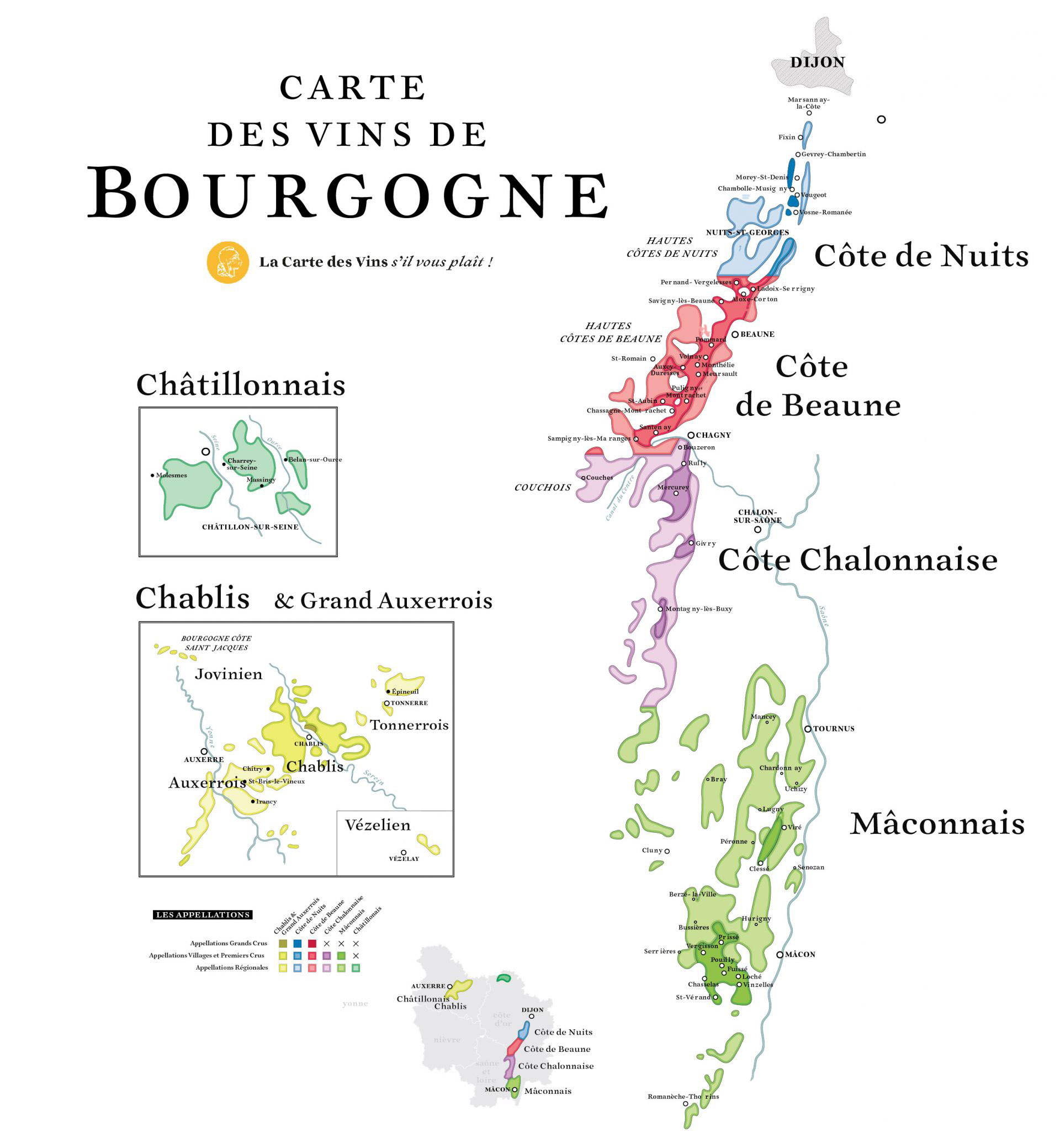
Stretching from the Mâconnais in the south to Chablis in the north, it offers its limestone soils to the sun and the elements over 250 km. Its relief, marked by a succession of combes and slopes, creates “Climats” with geological and sunlight characteristics that are very specific.
This gives rise to astonishing mosaics of vines, plots that are sometimes very small yet world-renowned.
Two essential grape varieties flourish here: pinot noir, which produces complex reds, and chardonnay, behind golden, rich whites that are also mineral and subtle.

Taxation of the Burgundy GFV
While the passion for wine remains the primary argument for investing in a Burgundy vineyard group, it cannot make one forget the numerous tax advantages it provides. Indeed, these advantages are varied and address different needs.
Taxation on income
The taxation on income from the group is also attractive.
It is subject to two tax regimes: micro-foncier or actual (réel).
In addition, taxation on real-estate capital gains upon resale decreases over time, up to full exemption after 30 years.
Real-estate wealth tax
Within the framework of thereal-estate wealth tax(IFI), an exemption of up to 75% of the value of the shares is granted for shares held for more than two years.
Inheritance
That said, the GFV is often cited as an example for its advantages regarding gifts and inheritance.
Indeed, in the event of inheritance or gift, the transfer will be exempt from duties up to 75%, and gifts made more than ten years ago cannot be included in the inheritance calculation.
Finally, the bottles received as GFV income are of course not taxable and are not included in the inheritance calculation. Given the prestige of certain AOCs and the value they gain over time, this element is far from negligible.
Map of Burgundy wines
Investing in a Burgundy GFV
The Burgundy vineyard transcends eras and trends and remains, throughout the world, the benchmark for exceptional wines.
Investing in it means becoming part of a thousand-year-old history where excellence, pleasure and passion come together every day.
Past, current and upcoming Burgundy GFVs…
Following the Burgundy slope (Côte), you inevitably pass through the charming village of Pommard. With a population of around 500, this village has spanned the centuries and already stood proudly on this site, surrounded by its vine-covered hills, 2,000 years ago.
The Domaine Moissenet-Bonnard, a family estate nestled in the heart of the village, is run by Emmanuelle-Sophie Moissenet. She has worked alongside her father, Jean-Louis Moissenet, for more than a decade and officially took over the estate in 2021.
Within this exclusively Burgundian Vineyard Land Group (GFV), two plots stand out: those of Pommard Les Cras and Pommard 1er Cru Les Epenots.
Located around the town of Beaune, the plots of the GFV Beaune offer reds full of character, youthful and which, as they age, become well-structured.
In white, with their beautiful green-gold colour, they offer aromas of honey and cinnamon balanced by a fresher, more vegetal bouquet of ferns and white flowers.
This GFV in the making, located near the commune of Beaune, aims to produce a white AOC Auxey-Duresses wine using the traditional method.
Its mineral aromas and notes of fresh almonds give it a lively attack that perfectly complements its body and richness.
This is the most northerly of Burgundy’s AOCs and perhaps the most polarising, as its fresh, mineral nose and vegetal notes give it a distinctive personality.
Its finesse, its uniqueness and its persistence guarantee it an exceptional place, far from any competition.
The GFV Bourgogne Côte de Nuits brings together members around the Clos du Chapitre at Fixin 1er Cru, in the north of the Côte de Nuits, managed by the Dufouleur family, winegrowers for more than 400 years.
This group offers participants the opportunity to invest collectively in a prestigious wine plot, farmed with respect for the environment and HVE3 certification.
Each year, members receive bottles of the wine produced, allowing them to benefit directly from the fruits of the terroir.
Among the Burgundy GFVs, we can mention for example the Brouilly vineyard land group.
Located on the Domaine Pierre Cotton, it offers vines grown using biodynamics, producing AOC Brouilly and Côtes de Brouilly.

Contact form about the Burgundy GFV
VINE PLOTS CURRENTLY BEING MARKETED
I wish to invest on my own in a plot directly rather than in a GFV
All regional opportunities to invest in French vineyards
Discover the other French wine regions where vineyard land groups (GFV) are regularly offered to private investors.
Alsace | Bordeaux | Burgundy | Rhône Valley | Champagne | Beaujolais | Languedoc-Roussillon | Jura | Loire Valley